The Analysis
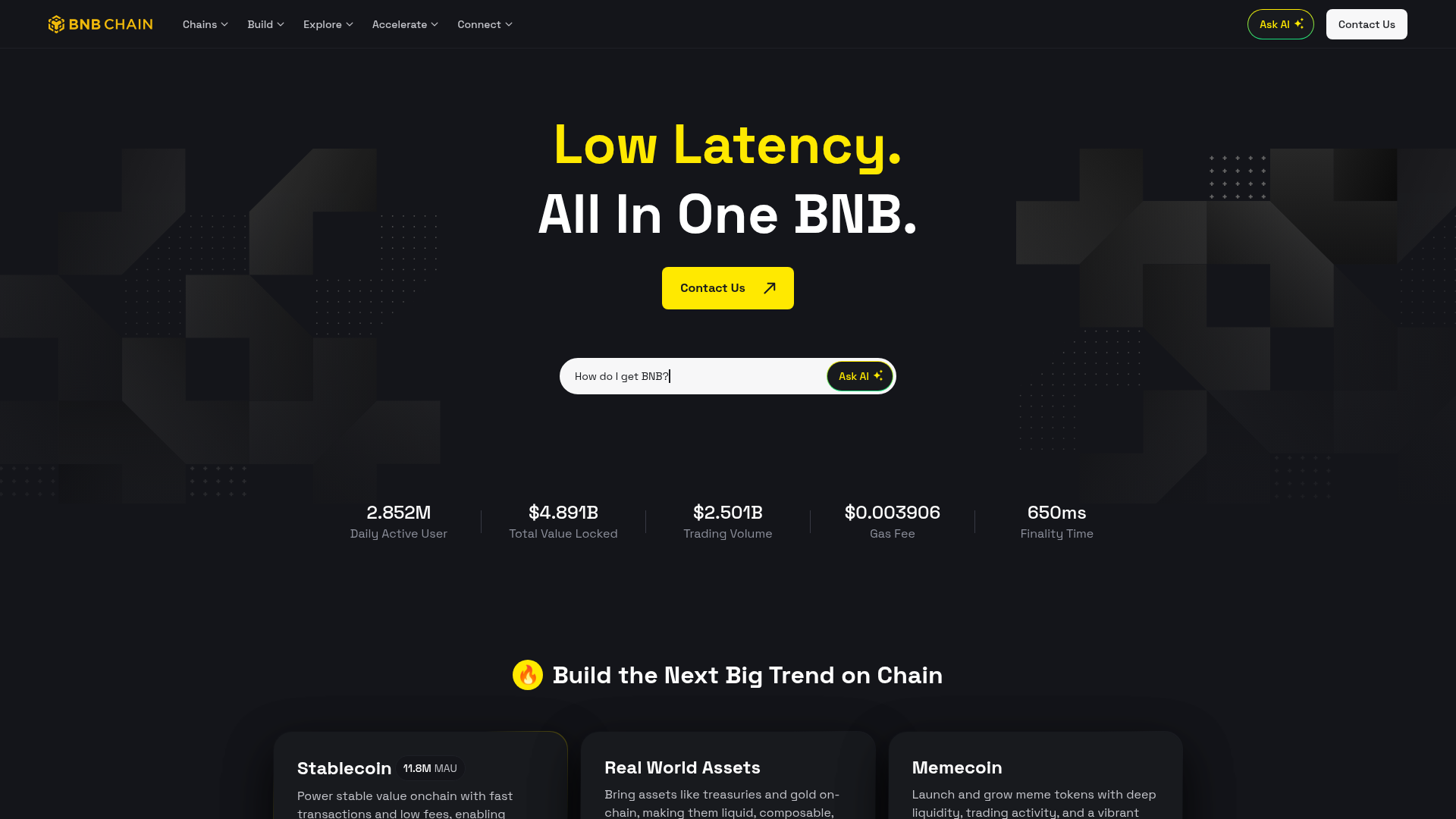
BNB Smart Chain has been quietly one of the most-used networks in crypto since 2020. Cheap, fast, fully EVM-compatible and backed by the deepest distribution channel in the industry, it converts consistently. The question the framework keeps asking is how much of its strength is the protocol and how much is the parent club.
Strengths
- Fast, cheap and fully EVM-equivalent — zero migration cost for Ethereum developers
- Among the highest daily active address and transaction counts in the industry
- Unmatched retail distribution through the parent exchange funnel
- Clear token economics with quarterly auto-burn and staking utility
Weaknesses
- Active validator set in the low tens, with founding-entity influence retained
- Protocol fortunes correlate with a single corporate parent's regulatory position
- Cheap blockspace attracts a high volume of low-quality and predatory token launches
First Half: Pragmatism as a Game Plan
BSC's founding tactic was not subtle and it worked brilliantly. In 2020, Ethereum fees made ordinary DeFi use unaffordable for most people. BSC forked a proven EVM design, ran it with a small, fast validator set, delivered three-second blocks at a few cents per transaction, and pointed the world's largest exchange user base at it. Within months it was processing more daily transactions than any competitor. Purists called it centralised; several million users called it the only version of DeFi they could afford.
That pragmatism has continued to define the club. Rather than pursuing novel consensus research, BNB Chain has focused on shipping incremental performance: sub-second block times through successive upgrades, meaningfully increased gas limits, opBNB as an optimistic rollup for high-throughput applications, and Greenfield for decentralised storage integrated with the same account model. It is an infrastructure roadmap written by people optimising for cost per transaction and developer familiarity rather than for whitepaper citations, and there is nothing wrong with that.
Technically the chain is competent and unfashionable. Proof-of-staked-authority with a limited active validator set produces fast finality and low fees at the explicit cost of validator decentralisation. Full EVM equivalence means every Ethereum tool, library, audit firm and developer works here on day one — no new language, no new mental model. For a team choosing where to deploy a consumer application on a budget, that combination remains extremely persuasive.
Utility Play: Volume, Breadth and Real Users
The activity is not manufactured. BNB Chain routinely posts among the highest daily active address and transaction counts in the industry, with a deep and diverse application layer: PancakeSwap remains one of the largest decentralised exchanges anywhere by volume, Venus provides established money markets, and the gaming, launchpad and consumer-token sectors are enormously active. Stablecoin liquidity is deep, bridges are well supported, and the chain has been a persistent home for retail-scale speculation and trading throughout multiple cycles.
BNB the asset is unusually well-integrated for a layer 1 token. It pays gas, secures the chain through staking, funds ecosystem programmes, and carries direct utility within the wider Binance product suite — fee discounts, launchpad participation, and more. The quarterly auto-burn mechanism removes supply algorithmically based on price and block production, working toward a substantially reduced final supply. Whether one considers that value accrual or exchange-linked demand, it is a clearer economic story than most layer 1 tokens can tell.
Distribution is the ace. New users arriving through the world's largest exchange land in an environment where BNB Chain is the path of least resistance: the wallet supports it, withdrawals are cheap on it, and the applications they hear about are deployed on it. No competing chain has an equivalent funnel, and in a sport where user acquisition is the hardest problem, owning the funnel is a structural advantage that engineering alone cannot overcome.
The Bench, the Terraces and the Caveats
The management pillar is where judgment is required. BNB Chain has made real, verifiable progress toward independence: an open validator election, a growing candidate set, community governance proposals, and a substantial ecosystem fund distributed to third-party builders. But an active validator set in the low tens, with meaningful influence retained by the founding entity, is materially more concentrated than the networks scoring five here. The 2022 bridge exploit, where a large cross-chain theft was contained by halting the chain, demonstrated both a competent emergency response and precisely the coordination capability that a fully decentralised network is not supposed to possess.
The regulatory chapter is also part of the record. The parent exchange's settlement with US authorities and the subsequent leadership change were significant events, and while the chain itself continued operating normally throughout, the episode illustrates the correlation between protocol fortunes and corporate fortunes that the framework has to account for.
On the terraces, BSC has one of the largest and most active retail user bases in crypto, though its reputation has been dented by the sheer volume of low-quality token launches and rug pulls that cheap blockspace attracts. That is a side effect of accessibility rather than a design failure — the same openness that lets a legitimate developer deploy for a few dollars lets a scammer do the same — but it does mean users need more caution here than on chains with higher barriers.
Full Time
Tactical tech: solid, fast, EVM-equivalent and consistently improving, without breaking new ground. Utility play: excellent — genuine volume, deep liquidity, a mature application layer and unmatched distribution. Management bench: improving but still concentrated, with visible correlation to a single corporate parent. Community support: enormous and active, if uneven in quality.
Four out of five. BNB Smart Chain is a considerably better network than its critics allow and a considerably less decentralised one than its defenders claim, and both of those things can be true at once. If your priority is cheap, reliable, familiar blockspace with the deepest retail distribution in the sport, this is a top-four side. If your priority is credible neutrality, the two chains above it in this table remain the answer.